What is the most likely cause?
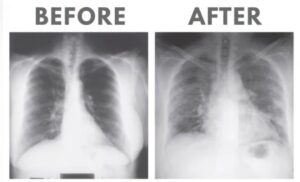
A. Cyclophosphamide
B. Bleomycin
C. Methotrexate
D. Doxorubicin
Answer: B. Bleomycin
Bleomycin is a chemotherapeutic antibiotic that causes dose-dependent pulmonary toxicity, most classically manifesting as interstitial pneumonitis progressing to pulmonary fibrosis. Gross pathology before exposure shows normal, spongy lung parenchyma, whereas after bleomycin injury the lungs appear firm with diffuse fibrotic changes and honeycombing.
The mechanism involves free radical formation and direct injury to pulmonary endothelium and epithelium. Because the lungs have low levels of bleomycin hydrolase, they are particularly vulnerable. Clinically, patients develop progressive dyspnea, nonproductive cough, and restrictive lung physiology with reduced diffusion capacity (DLCO).
Cyclophosphamide is associated with hemorrhagic cystitis due to acrolein metabolite.
Methotrexate can cause pulmonary fibrosis but less classically and not with the same dose-dependent pattern.
Doxorubicin causes cardiotoxicity (dilated cardiomyopathy), not pulmonary fibrosis.
Leave a Reply